If you’re just picking up a hook for the first time, you’re probably wondering what supplies you actually need to get going. The truth is, having a solid set of quality tools makes a real difference in how your projects turn out, and honestly, how much you enjoy making them. In this article, we’re going to walk through all the essential crochet tools you’ll want in your kit, whether you’re starting from scratch or trying to level up your craft.
Essential Crochet Tools and Accessories
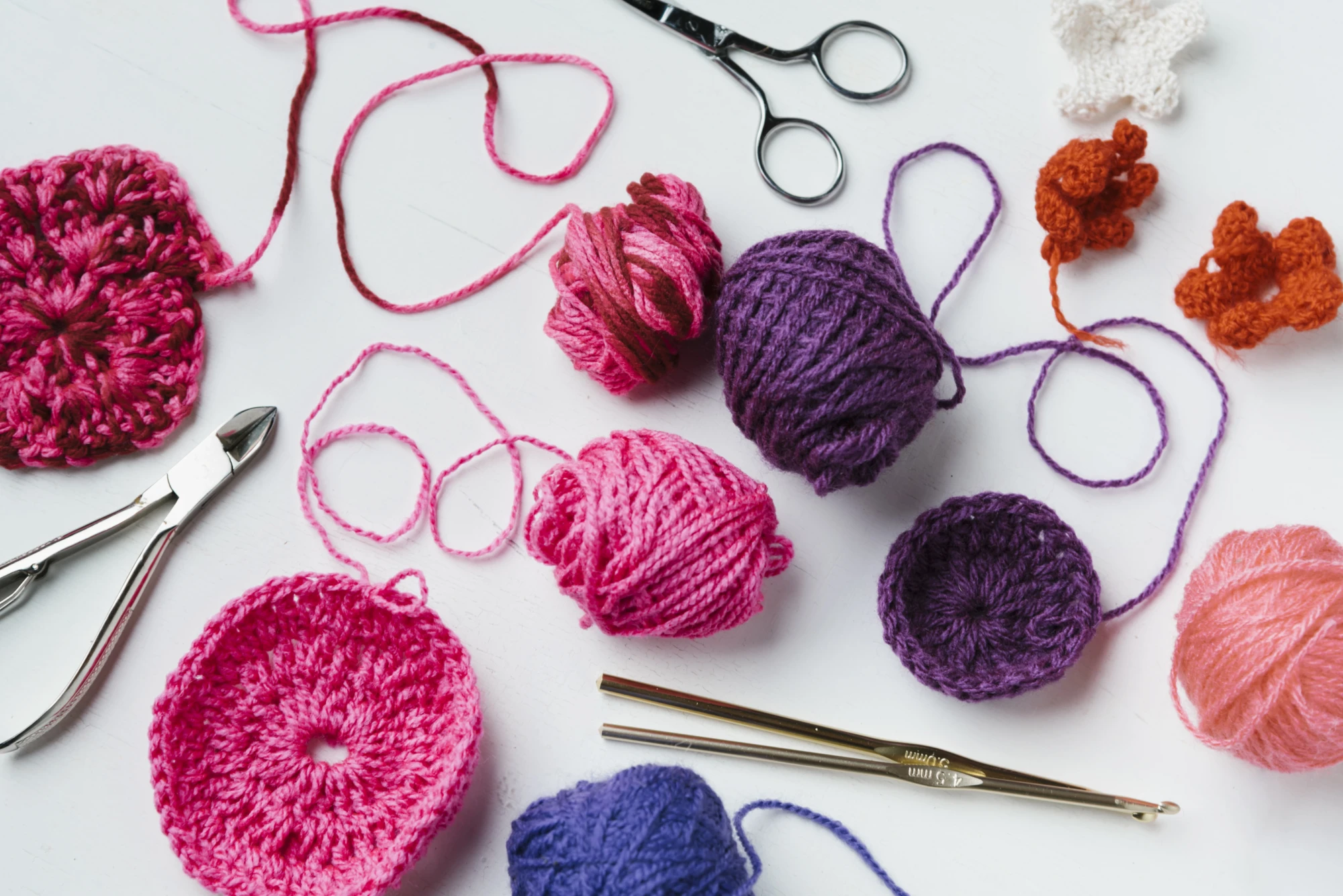
The right tools can completely change your crocheting experience. From hooks in different sizes to stitch markers and tapestry needles, there’s a whole world of little gadgets that seasoned crocheters swear by.
These basic crochet tools and accessories will help you tackle everything from a quick dishcloth to a cozy afghan that takes weeks to finish. Let’s go through them one by one.
1. Crochet Hooks
Crochet hooks are made from all sorts of materials, including aluminum, steel, plastic, wood, and ergonomic designs built for comfort.
When you’re deciding which ones to buy, keep these points in mind:
- Steel hooks are the go-to choice for fine, detailed work with thin yarn and delicate crochet threads.
- Aluminum hooks are incredibly versatile and have a smooth surface, so your yarn slides along nicely as you work.
- Plastic hooks are the cheapest option out there, which makes them a solid pick if you’re just testing the waters.
- Wooden hooks have this warm, natural feel to them that a lot of crocheters genuinely love.
- Ergonomic crochet hooks come with a cushioned grip, and they can really help if you struggle with wrist or hand fatigue during long sessions.
The type you pick mostly comes down to personal preference. Try a few different kinds before settling on one, because you might be surprised which feels right in your hand.
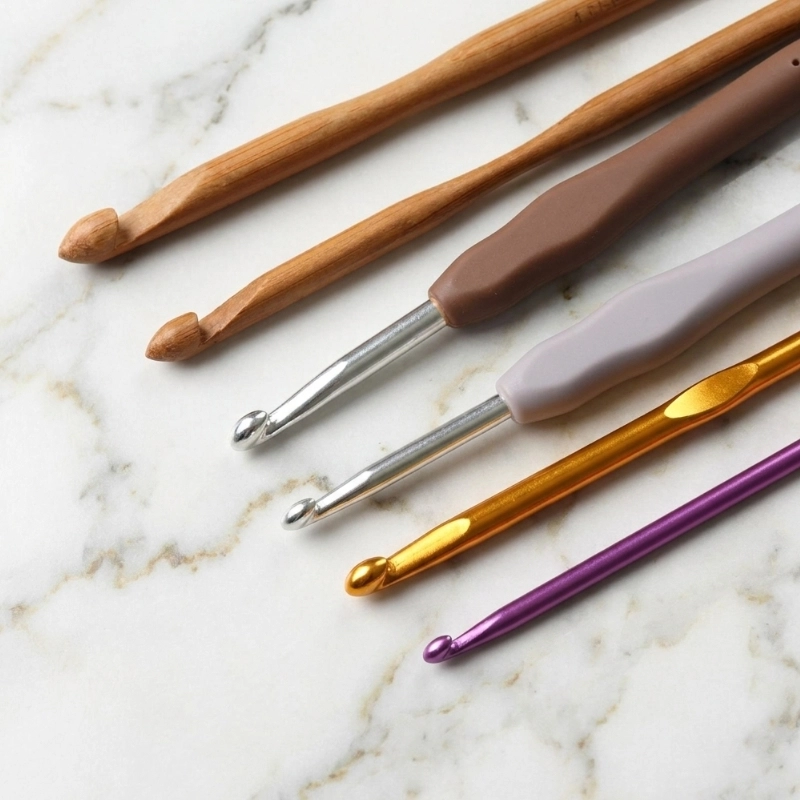
Picking the right hook size for your project matters just as much as the material. Standard crochet hook sizes usually run from 2 mm up to 6.5 mm, though you can absolutely find them much smaller or much bigger.
Smaller hooks are better for delicate work and thin yarn, while larger hooks let you power through chunky yarn and bigger projects quickly. A full crochet hook set gives you every option you could want in one go. Brands like Clover and Boye are well-known favorites, and they make hooks to suit just about every style of crocheter.
Whenever you’re working from a pattern, the hook size you need will be listed right there, so always check before you start.
For most beginners, a 5 mm crochet hook is the sweet spot. It sits right in the middle of the size range, works with plenty of different yarns, and is perfect for practicing those first basic stitches.
2. Yarn
Yarn comes in tons of different fibers, but the most common ones are cotton, wool, and acrylic. The one you reach for really depends on what you’re making.
Cotton is wonderful for dishcloths and breezy summer pieces, wool keeps you warm through winter garments, and acrylic is the workhorse that’s both affordable and easy to find.
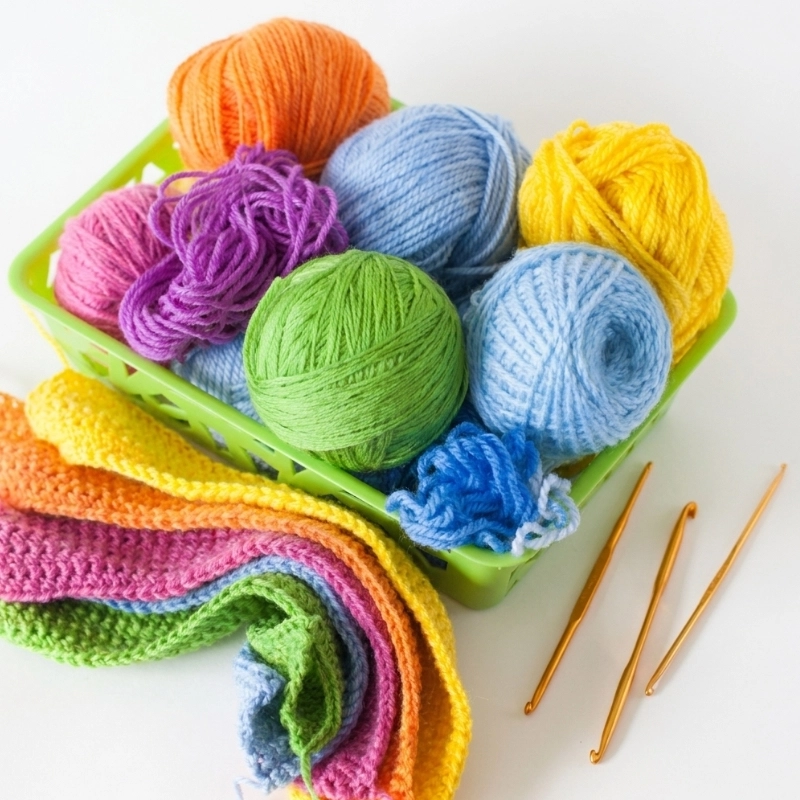
You’ll also want to pay attention to the weight and texture of your yarn, since both of those things change how your finished piece looks and feels. Some patterns are written specifically for certain yarn types, so always double-check the recommendations before you buy.
For newcomers, medium weight yarn is really your best friend. Try to stay away from dark shades and fuzzy textures when you’re starting out, because those make it almost impossible to see your stitches. Light-colored, smooth yarn makes it so much easier to count and fix mistakes.
3. Scissors and Yarn Cutter
A good pair of scissors is something you simply can’t skip. Yarn cutters are neat little tools for quick snips, but honestly, a favorite pair of sharp scissors gets the job done just fine. Whatever you use, make sure the blades are sharp so you don’t end up with frayed, messy ends.
4. Stitch Markers
Stitch markers are one of those small items that save you from tons of headaches, especially when you’re working on something complex. They’re particularly handy for amigurumi, where you work in continuous rounds and lose your place in a heartbeat.
You’ll see a few different kinds out there, including locking, split ring, and loop markers. For crochet, split rings are the way to go. You can slip them on and off easily at any point in your work, which is exactly what you need. Closed markers don’t really work for crochet since you can’t remove them mid-project, so leave those for the knitters.
If you’re trying to save money, you can make your own markers by cutting small pieces of contrasting yarn and tying them on loosely.
Use your stitch markers to mark the start of rounds, spots where you need to increase or decrease, or any other key point in the pattern. Once you get used to having them, you’ll wonder how you ever managed without.
5. Tape Measure and Ruler
Measuring is a much bigger part of crochet than people expect. A flexible tape measure is perfect for going around curved pieces, and a ruler comes in handy when you’re checking flat sections.
Checking your gauge is one of the most important things you can do before diving into a project. Make a small swatch, then count how many stitches and rows fit into an inch. If the numbers don’t match the pattern, you’ll need to adjust your hook size or yarn until they do.
6. Tapestry Needles
Tapestry needles, which some people also call darning needles or yarn needles, are what you use for weaving in loose ends and sewing pieces together. No crochet kit is really complete without at least a couple of them.
They come in various sizes and are usually made from either plastic or metal. Look for ones with a large eye, since threading chunky yarn through a tiny hole is a special kind of frustration. Use these needles to finish your projects neatly by tucking away the yarn tails and joining pieces so the seams basically disappear.
7. Blocking Mats and Pins
Blocking is the little finishing step that takes your projects from “homemade” to “wow, you made that?” Having a blocking mat or two plus a handful of pins makes a huge difference. The mats hold your piece in place while it dries, letting you shape it to exactly the right dimensions. Foam mats and those interlocking puzzle-piece tiles both work great for this.
8. Storage Solutions
Keeping your supplies organized makes crafting so much more relaxing. There are plenty of options out there, from clear plastic bins to fabric bag organizers, yarn storage totes, and special hook cases.
If you want a nice way to carry your current project around, think about grabbing or making a project bag. There are loads of gorgeous crochet bag patterns around that you can use to make your own.
A well-organized tote keeps all your accessories together in one spot. You can also get creative with DIY storage by using old jars, boxes, or tins to hold your hooks and notions. Sorting everything by type and size means you’ll never have to dig around looking for that 4 mm hook again.
Even More Useful Crochet Tools
There’s a whole universe of extra gadgets out there once you really get into the craft. Things like ball winders, yarn bowls, pom-pom makers, stitch counters, row counters, and blocking wires are all worth exploring as you keep growing your collection.
Where To Get Crochet Supplies Near Me
Finding crochet supplies these days is easier than it’s ever been. Big craft stores like Michaels, Joann, and Hobby Lobby usually have a solid selection of yarn, hooks, and all the other bits and pieces you might need. It’s also worth popping into smaller independent yarn shops in your area, since they often carry unique, high-quality materials you won’t see anywhere else.
If you’d rather shop from your couch, online marketplaces are loaded with options. You can find pretty much anything you could dream of, from budget-friendly starter sets to hand-dyed specialty yarns made by independent crafters. No matter where you end up shopping, there are so many choices you’ll have no problem stocking up.
Conclusion
The right crochet tools really do make a world of difference in how much you enjoy this craft. Drop a comment below and tell us which tools you can’t live without, or which ones changed the game for you when you were starting out.
FAQ
What are the essential tools needed for crochet?
The must-haves for crochet are hooks, yarn, a pair of scissors, a tape measure or ruler, and a tapestry needle. With just those basics, you can start, work through, and finish pretty much any project without a problem.
What are the different types of crochet hooks and their uses?
Crochet hooks come in aluminum, steel, plastic, wood, and ergonomic styles. Aluminum is the versatile everyday pick, steel is made for fine thread work, plastic handles bulky yarns well, and ergonomic hooks are designed to take pressure off your hands during long crochet sessions.
How do I choose the right size crochet hook for my project?
Start by looking at the yarn label, which usually suggests a hook size. Then check your pattern and follow what it recommends. If your gauge swatch doesn’t match the pattern, you can go up or down a hook size until the numbers work out.
What type of yarn is best for crochet projects?
It really depends on what you’re making. Cotton is great for kitchen items and warm-weather clothes, wool is the choice for cozy winter pieces, and acrylic is the all-rounder that works for almost anything on a budget. Always think about texture, weight, and washing instructions before you pick.
What is the purpose of stitch markers in crochet?
Stitch markers help you keep track of where you are in your work. You use them to mark the beginning of a round, spots where you need to increase or decrease, or any other important point in a pattern. They’re especially useful for complex designs where losing your place can throw off the whole project.